
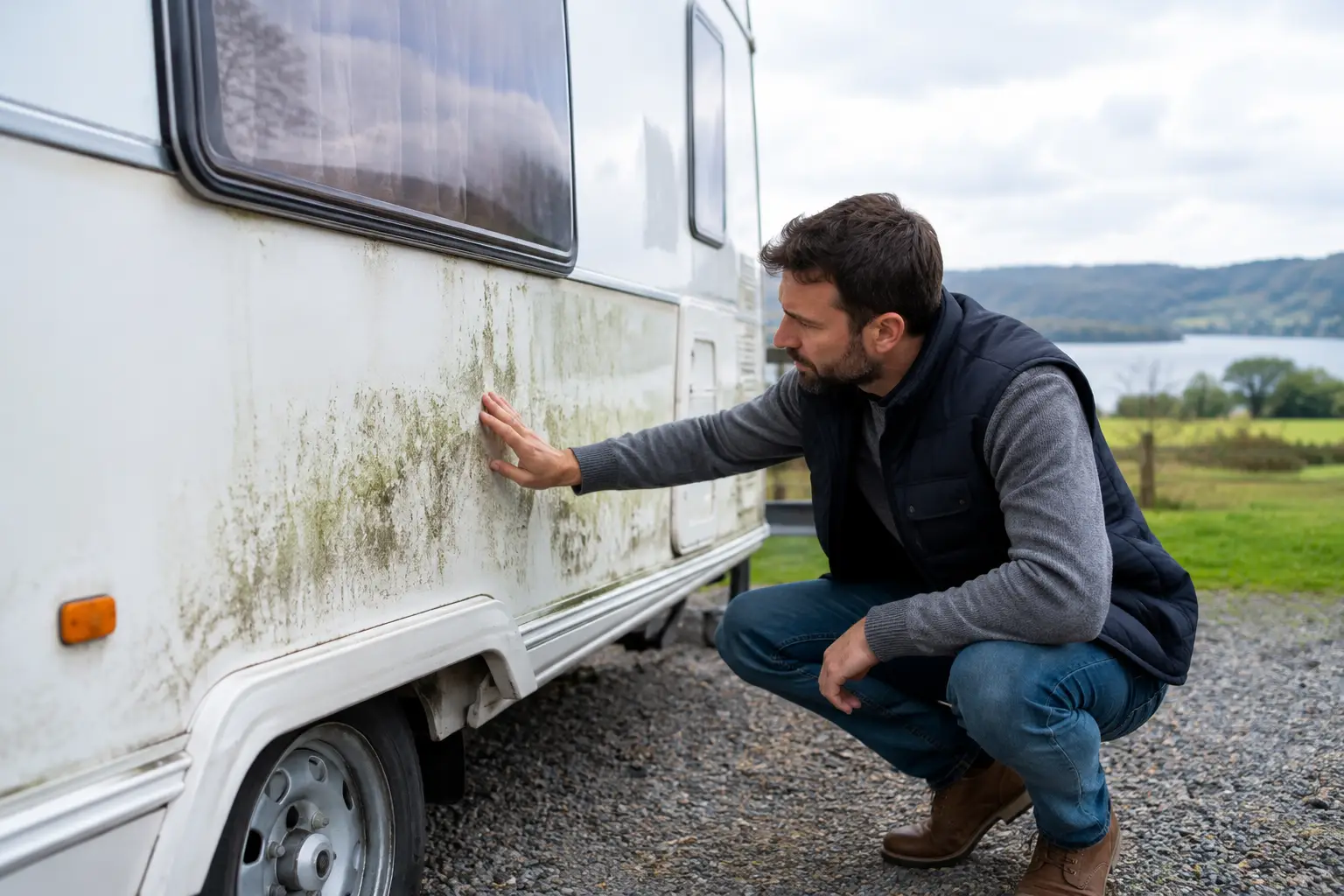
A damp reading on a caravan wall can turn an easy upgrade into a worrying decision. If you are thinking, “I need to sell my caravan with damp”, the good news is that it can still be sold. The key is to be honest about its condition, understand what affects its value and choose a buyer equipped to deal with damp or damaged leisure vehicles.
Damp does not automatically mean a caravan is worthless. Its impact depends on where it is found, how widespread it is, the age and overall condition of the caravan, and whether there are signs of structural damage. A straightforward sale is possible when the vehicle is described accurately and priced fairly.
Can I Sell My Caravan With Damp?
Yes. Many buyers, dealers and repair specialists will buy caravans with damp. Some are looking for a repair project, some need parts, and experienced caravan buyers may have the facilities to assess and repair a vehicle that a private buyer would understandably avoid.
What is much harder is selling a damp caravan privately without being clear about the problem. A purchaser who discovers soft walls, staining, a musty smell or high moisture readings after viewing is likely to walk away. Worse still, hiding known faults can lead to a dispute after the sale.
Being open from the outset saves time. You do not need to be a damp surveyor, but you should say what you know. For example, explain whether the caravan has had a professional damp check, where the damp was identified, whether repairs have been attempted and whether there is any visible damage. Clear information allows a buyer to make a realistic offer rather than arriving with expectations that cannot be met.
What Damp Means for Your Caravan’s Value
Damp is caused by water getting into the caravan, often through failed seals around windows, rooflights, awning rails, corner mouldings or roof joints. Once moisture reaches the timber framework behind the wallboard, it can cause rot. That is why a small-looking issue sometimes has a larger effect on value than owners expect.
The biggest factors are the location and extent of the problem. A localised issue around a window seal may be repairable without major rebuilding. Damp in several walls, the floor, roof or front panel is likely to involve more labour and materials. Soft internal panels, bubbling wallpaper, black mould and a strong damp smell will also affect the price because they indicate that the issue may have been present for some time.
Age matters too. An older caravan with damp may still be useful as an affordable project, seasonal accommodation or a source of parts. On a newer, higher-value caravan, a buyer will look carefully at whether repair costs make financial sense. Appliances, upholstery, tyres, service history and a clean interior can all help, but they will not remove the need to account for structural repairs.
A fair valuation is not a punishment for owning a faulty caravan. It is simply based on what the buyer can realistically resell, repair or recover from the vehicle after allowing for risk, labour, transport and parts.
Should You Repair Damp Before Selling?
It depends on the scale of the problem and the cost of repair. If the damp is minor, clearly localised and you have a trusted caravan repairer, obtaining a quote can help you decide. A properly documented repair may make the caravan easier to sell and could improve its value.
However, damp repairs can become expensive once panels are removed. What begins as a small seal failure may reveal wet insulation, rotten timber or damage extending beyond the visible area. Spending a large amount before selling does not always mean you will recover every pound in the final price.
For many owners, particularly where the caravan is older, damaged or no longer being used, selling it as it stands is the simpler option. This avoids arranging repairs, storing the caravan while work is completed and taking on the uncertainty of a growing repair bill. A buyer who regularly purchases damp caravans can assess it in its current condition and make an offer accordingly.
Prepare the Caravan for an Honest Valuation
You do not need to make a damp caravan look perfect, but a little preparation helps a buyer assess it quickly and fairly. Remove personal belongings, give the interior a basic clean and make sure the caravan is accessible. Do not cover damp patches, repaint over staining or use strong air fresheners to disguise a musty smell. These measures tend to create mistrust rather than improve the offer.
Have the caravan details ready, including the make, model, year, registration number where applicable, ownership documents, service history and any damp reports. Photographs are useful when requesting a valuation. Take clear images of each side, the front and rear, the lounge, kitchen, washroom, bedrooms and any visible damp areas or damage.
It also helps to be upfront about the practical details. Let the buyer know if the caravan has been standing for a long period, has flat tyres, is missing keys, has an issue with towing lights, or is located on a site with restricted access. These do not necessarily prevent a sale, but they can affect collection arrangements. Accurate information helps avoid delays on the day.
Selling Privately Versus Selling to a Specialist Buyer
A private sale may appear to offer the highest possible price, but it can be difficult with damp. You may need to answer repeated questions, arrange viewings, deal with buyers who change their mind and negotiate after every inspection. Most private buyers want a caravan ready for their next holiday, not a vehicle needing structural work.
Selling to a specialist buyer is usually more direct. The offer may reflect the repair work needed, but it also removes many of the usual problems: advertising costs, time-wasting enquiries, towing concerns and uncertainty over whether the purchaser will collect. This route can be particularly useful if the caravan cannot safely be towed, has been rejected at a part exchange, or is taking up space on a driveway or storage pitch.
MP Leisure buys damp, damaged and unwanted caravans all year round, offering a fair and honest valuation with free nationwide collection. A specialist purchase is not right for every caravan, especially one with a very minor issue that is economical to repair, but it gives owners a clear route when a quick, hassle-free sale matters more than waiting for the ideal private buyer.
Questions to Ask Before Accepting an Offer
A sensible buyer should explain how the process works before collection is arranged. Confirm whether the price is based on the information and photographs you have provided, what could cause the offer to change after inspection, and whether collection is included. Ask how and when payment will be made, and make sure you are happy that funds have cleared before the caravan leaves.
You should also check what paperwork is required. Keep a written record of the sale, including the caravan details, date, agreed price and the fact that it was sold with its known condition disclosed. If the caravan is on a storage site, check its rules for collection and whether you need to notify the site manager in advance.
Be cautious of anyone who offers an unrealistic price without asking about condition, then tries to reduce it heavily when they arrive. A fair buyer may adjust an offer if important information was not disclosed, but there should be no surprises where the damp has been described honestly from the start.
Make the Next Step Simple
Damp can feel like the end of your caravan ownership, but it does not have to create months of stress. Gather the details, describe the condition clearly and seek a valuation from a buyer who understands the work involved. Whether the issue is a small area of water ingress or widespread structural damp, an honest conversation is the quickest way to turn an unwanted caravan into a completed sale and free up space for whatever comes next.


One Comment