
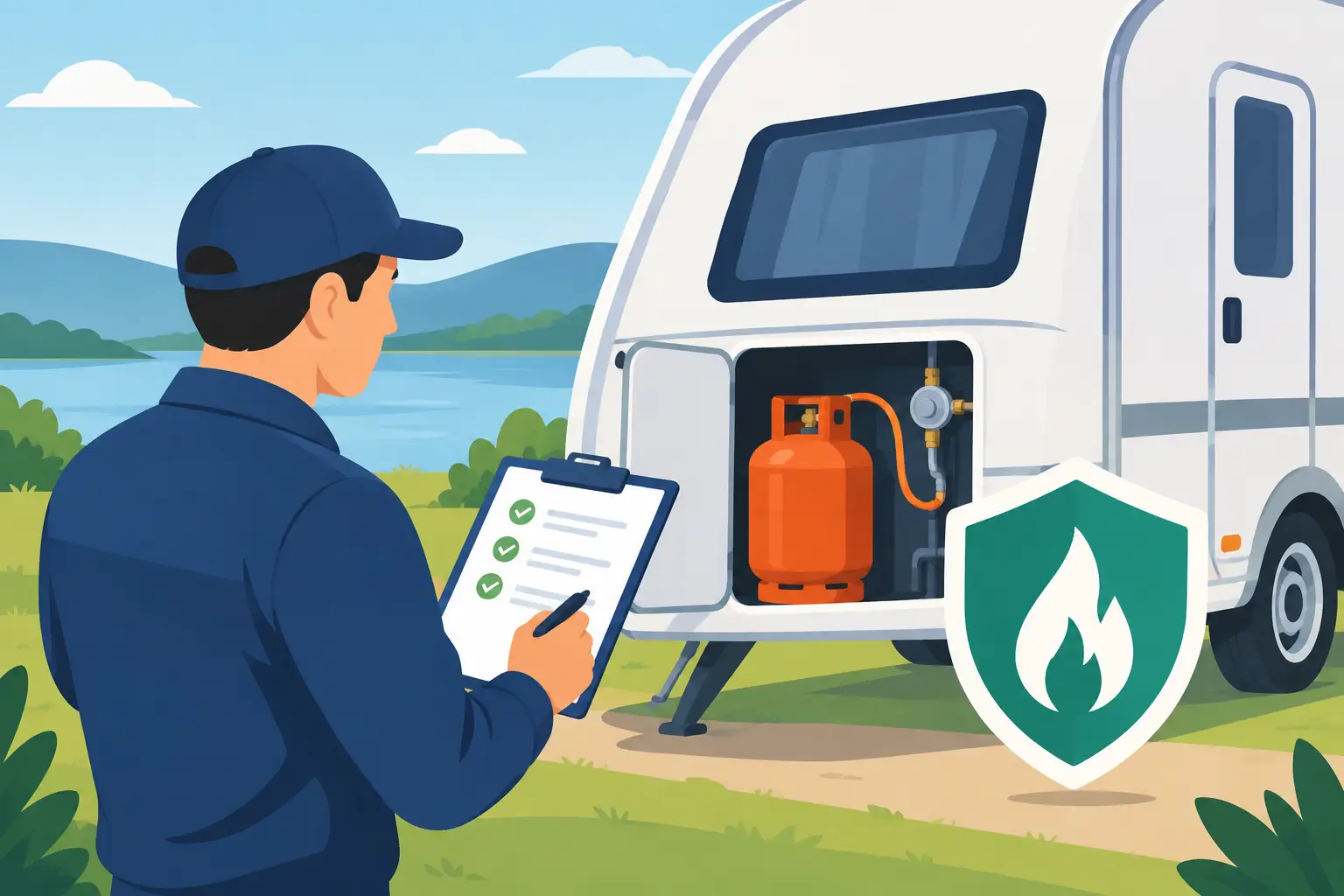
A quiet gas system is easy to take for granted – right up until a cooker will not light, the heating cuts out on a cold evening, or you notice an unfamiliar smell inside the caravan. A caravan gas safety certificate is practical reassurance that the LPG system has been checked properly before you set off. For first-time owners especially, it is one of the clearest ways to begin touring with confidence.
Gas appliances in a touring caravan work hard. They provide cooking, hot water, heating and, in many caravans, refrigeration when you are not on an electric hook-up. Because LPG is highly flammable and combustion appliances can produce carbon monoxide if they are faulty or poorly ventilated, these systems deserve more than a quick visual check.
What is a caravan gas safety certificate?
A caravan gas safety certificate is the record issued after an appropriate inspection and testing of the caravan’s gas installation and appliances. It is often referred to as a gas safety record. The exact paperwork can vary between engineers, but it should clearly show what has been checked, any defects found, and whether the system or individual appliances are safe to use.
The work should be carried out by a Gas Safe registered engineer who is qualified for LPG appliances in touring caravans and motorhomes. Domestic gas experience alone is not necessarily enough. Leisure vehicles have their own layouts, ventilation requirements, pipework routes and appliance arrangements, so it makes sense to use somebody who understands them.
A certificate is not a guarantee that nothing can ever go wrong after the inspection. It confirms the condition of the installation at the time it was checked. Damage in storage, ageing hoses, changes made by an owner or a loose connection after changing a gas bottle can all alter that position. Think of it as a proper safety snapshot, backed by a written record.
What should the gas check cover?
A thorough inspection is more than seeing whether the hob lights. The engineer will normally examine accessible pipework, joints, hose condition, regulators, isolation valves and the gas locker. They will test for gas tightness to identify leaks and check that appliances are operating as they should.
The cooker, space heater, water heater and refrigerator, where fitted and designed to run on gas, may all form part of the inspection. Checks can include ignition, flame picture, burner condition, flue performance and ventilation. Fixed vents must not be blocked, even if they make the caravan feel draughty during colder weather. They are there to allow fresh air in and combustion gases out.
Carbon monoxide alarms and smoke alarms are not a substitute for servicing, but they are an essential additional safeguard. Check that they are present where required, within date where applicable, and tested regularly. If an alarm sounds, turn off gas appliances if it is safe to do so, ventilate the caravan, leave the area and seek professional advice. Do not simply silence the alarm and carry on.
If the engineer identifies a fault, ask for it to be explained in plain terms. Some issues may be straightforward, such as an out-of-date hose or a failed appliance igniter. Others can mean an appliance should not be used until it has been repaired. A clear report helps you understand what needs doing and avoids guessing later.
Is a caravan gas safety certificate legally required?
For a privately owned touring caravan used by its owner, there is not usually the same annual legal certification requirement that applies to a rented domestic property. That does not make annual checks optional from a safety point of view. LPG equipment is subject to vibration on the road, long periods standing unused, damp conditions and general wear.
The position changes when a caravan is hired out or used in a business setting. The operator has responsibilities to make sure gas equipment is maintained safely, and documented inspections are a sensible and often necessary part of meeting those duties. Site rules, insurers and warranty providers may also set their own requirements.
If you are buying a used caravan, a current certificate is valuable reassurance, but do check its date and read any advisory points. A certificate from last season may show that the system was safe then; it does not replace a check if the caravan has been stored for months, suffered damage or has an unknown service history.
At MP Leisure, gas safety documentation forms part of the reassurance buyers should expect when purchasing a pre-owned leisure vehicle. It sits alongside a proper explanation of the caravan and its equipment, not in place of one.
Gas safety certificate versus a habitation check
These terms are often used together, but they are not the same thing. A gas safety inspection focuses specifically on the LPG installation and gas appliances. A habitation check is broader, covering key living-area systems and condition items such as electrics, water, heating, ventilation and, depending on the inspection, signs of damp or water ingress.
A full habitation check can be particularly useful when buying an older caravan or one with limited paperwork. It gives a wider view of the vehicle, while the gas certificate deals with one of the most safety-critical systems. One should not be assumed to include the other, so always ask what is covered before booking or agreeing a sale.
The right level of inspection depends on the caravan’s age, history and intended use. A well-documented caravan that has been regularly serviced may need a routine annual check. A caravan that has stood unused, has been bought privately, or shows signs of damage should be assessed more carefully before the first trip.
When to arrange a gas inspection
Annual inspection is a sensible routine for most caravan owners, ideally before the main touring season. It is also wise to arrange one after a long period in storage, after an accident or repair near the gas system, or before taking a newly purchased used caravan away.
Do not wait for an obvious problem. Yellow or lazy flames, soot marks, appliances that repeatedly go out, a smell of gas, headaches when appliances are running, or unexplained condensation all deserve prompt attention. A gas smell requires immediate action: extinguish naked flames, do not operate electrical switches, shut off the supply if safe, ventilate the caravan and get professional help.
You can make an engineer’s visit more useful by ensuring the gas locker is accessible, keeping paperwork to hand and mentioning any faults you have noticed. If an appliance only misbehaves occasionally, describe when it happens – for example, only when the caravan has been standing overnight or when more than one appliance is running.
Simple checks between professional visits
Owners should not dismantle gas appliances or attempt repairs beyond their competence. There are, however, a few sensible habits that help spot trouble early. Before travelling, make sure gas bottles are upright and properly secured, with the cylinder valve closed. Check that the locker is clear of loose items and that its drainage is not blocked.
When setting up on site, inspect the visible hose for cracking, stiffness or damage, and make sure it is not trapped by the locker door. Never use a flame to look for a leak. If you suspect one, turn off the gas and arrange for a qualified engineer to investigate. Keep appliance vents clear and never use a cooker or oven to heat the caravan.
It is also worth reading the appliance manuals rather than relying on a previous owner’s routine. Different heaters and fridges have specific start-up, ventilation and maintenance requirements. A few minutes with the handbook can prevent a frustrating call-out on your first weekend away.
Keep the paperwork with the caravan
Store your gas safety record with service invoices, manuals and any repair receipts. It gives you a useful maintenance history, makes future inspections easier and can help reassure the next owner when it is time to sell or part exchange. If faults were found and repaired, retain evidence of that work too.
A caravan should make holidays simpler, not leave you wondering whether the heating, hot water or cooker is safe to use. Arrange checks at sensible intervals, act quickly on warning signs and keep the certificate with the vehicle. That is straightforward care that protects everyone travelling with you.